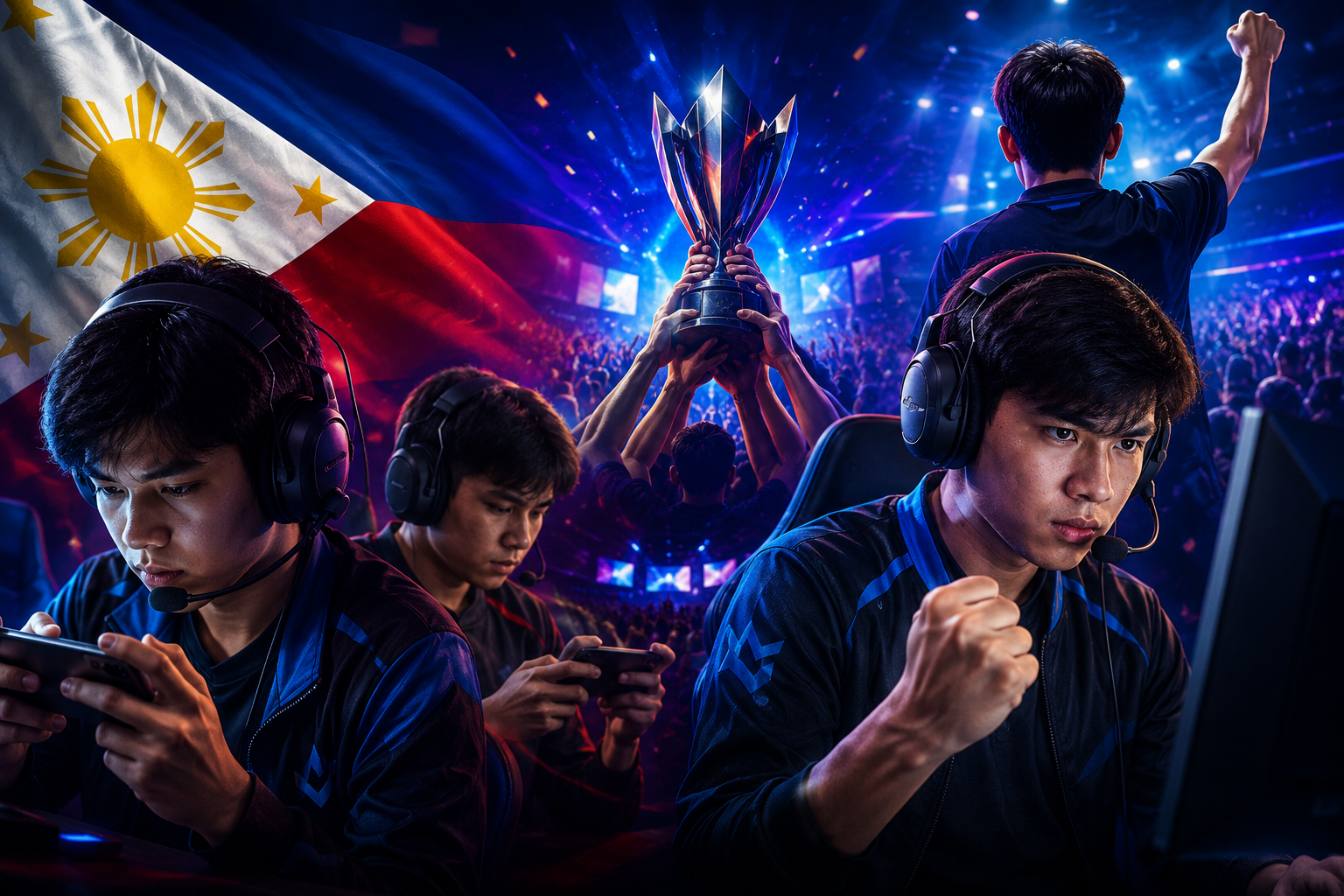
The Philippines has evolved into one of the strongest competitive gaming regions in the world.
From dominating Mobile Legends: Bang Bang tournaments to producing elite talents in titles like Valorant and Dota 2, Filipino players have consistently proven they can compete with—and defeat—the best teams globally.
But what exactly makes Filipino gamers so competitive?
The answer goes beyond mechanics and strategy. It’s rooted in culture, adaptability, passion, and the uniquely competitive environment that defines gaming in the Philippines.
Gaming Is Deeply Embedded in Filipino Culture
Long before esports became mainstream, gaming was already a major part of everyday Filipino life.
Computer shops became training grounds for aspiring players, where competition naturally developed through local rivalries and community-based gaming. Even before organized tournaments, players were already sharpening their skills in highly competitive environments.
Today, mobile gaming has expanded that culture even further. Nearly anyone with a smartphone can access competitive games, making esports more inclusive and widespread across different communities.
For many Filipinos, gaming is not just entertainment—it’s a social activity deeply integrated into daily life.
Mobile Gaming Helped the Philippines Thrive
The rise of mobile esports played a huge role in the Philippines’ dominance.
Unlike regions that relied heavily on expensive PC setups, the Philippines embraced mobile gaming early due to accessibility and affordability. Titles like Mobile Legends: Bang Bang exploded in popularity, creating millions of active players and an enormous talent pool.
This accessibility allowed talented players to emerge from virtually anywhere in the country, regardless of background.
As a result, Philippine esports organizations gained access to a massive pipeline of skilled competitors capable of performing at the highest level.
Filipino Players Are Naturally Adaptive
One of the most respected qualities of Filipino esports players is adaptability.
Filipino teams are often praised internationally for their:
- Aggressive playstyles
- Creative decision-making
- Fast in-game adjustments
- Strong chemistry and communication
This “diskarte” mentality—the ability to improvise and adapt under pressure—has become a defining trait of many Filipino competitors.
In fast-evolving esports environments where strategies constantly change, adaptability is often the difference between winning and losing.
Filipino Players Are No Longer Underdogs
There was a time when Southeast Asian teams were underestimated internationally.
That is no longer the case.
Today, Filipino players and organizations are viewed as legitimate global contenders, especially in mobile esports. Philippine teams have won world championships, dominated international tournaments, and helped redefine competitive standards in several titles.
The country is no longer chasing recognition—it is helping shape the future of esports itself.
Final Thoughts
The success of Filipino esports players is not accidental.
It is the result of:
- Deep-rooted gaming culture
- Accessible mobile gaming ecosystems
- Strong teamwork and adaptability
- Passionate community support
- Relentless competitive drive
As esports continues to grow worldwide, the Philippines remains firmly positioned as one of the industry’s most influential and competitive regions.
And judging by the next generation of rising talent, Filipino players are only getting started.